Little Candies, Big Love
The Story Behind Our Christmas Caramelle Pasta
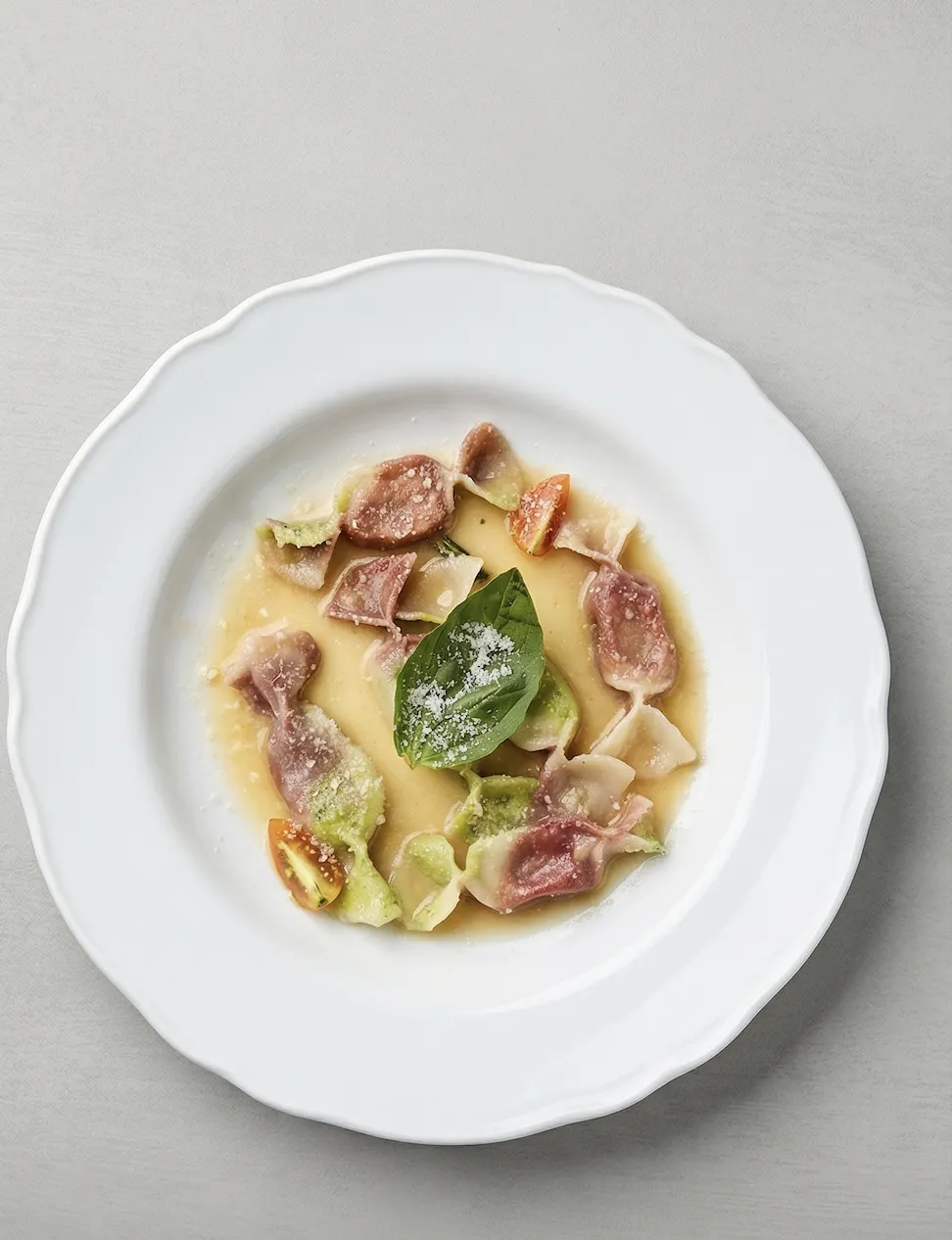
There is something about Christmas that demands more than just good food. It demands food that means something. Food that carries a feeling, that wraps itself around the people at the table like a warm embrace. When we sat down as a team at Naveh Collective to think about what we wanted to serve at our Christmas community dinner, we did not start with a recipe. We started with a question: what does Christmas feel like?
The answer, for me, was simple. Christmas feels like happiness. It feels like spreading love to everyone around you, without exception. And once I had that answer, the dish almost chose itself.
The Pasta That Looks Like a Gift
Caramelle pasta is one of the most visually joyful things you can put on a plate. Originating from the Emilia-Romagna region of Italy, a region that has given the world some of its most beloved pasta traditions, Caramelle is a stuffed pasta shape crafted to look exactly like a wrapped candy. The word itself translates to "candies" in Italian. Every single piece, when made correctly, looks like a little sweet wrapped at both ends, ready to be unwrapped and savoured.
The moment I thought about Caramelle for our Christmas dinner, everything clicked. Christmas is the season of giving. It is the season of sweets, of gifts wrapped in paper, of small joys passed from hand to hand. What better way to bring that spirit to the table than with a pasta that literally looks like a piece of candy? It was playful, intentional, and exactly the kind of detail that makes a guest pause, smile, and feel like someone thought about them when creating this dish.
At Naveh Collective, that is always the goal. To make every guest feel seen.
A Dinner for Everyone
Our Christmas event was a community dinner gathering, one of the most meaningful formats of hospitality there is. Not a tasting menu, not a fine dining sequence, but a true communal table where people from all walks of life come together to share a meal.
And with a community gathering comes a beautiful challenge. You do not always know who is walking through the door. You do not know how many vegetarians will be seated alongside meat eaters. You do not know the preferences, the restrictions, the stories people carry with them. What you do know is that every single person deserves to eat something extraordinary.
That principle shaped every decision I made for this dish.
The Filling: Simple, Fresh, In-House
For the filling, I chose spinach and ricotta, a pairing as classic and comforting as Christmas itself. Rich, creamy ricotta made entirely in-house at Naveh Collective, folded together with fresh spinach. Clean flavours. Honest ingredients. Nothing hidden.
The decision to go vegetarian with the filling was both practical and philosophical. With a community dinner of unknown size and varying dietary preferences, I wanted a filling that would welcome everyone to the table equally. There is a kind of quiet generosity in that choice. The idea that the most important dish of the evening should belong to every single guest, without anyone feeling like an afterthought.
Making the ricotta in-house was non-negotiable. At Naveh Collective, we make everything fresh from scratch. That commitment is not just a point of pride. It is the foundation of the flavour. When you taste the difference between a filling made from fresh in-house ricotta and one from a commercial tub, there is no going back.
Two Sauces, One Philosophy
The sauce presented a different kind of creative challenge. I wanted to honour both the vegetarians and the non-vegetarians at the table with something equally special. The solution was elegant in its simplicity: two sauces, built on the same aromatic foundation, differentiated only by their stock.
For the non-vegetarian guests, a sauce of chicken stock, butter, garlic, and rosemary. Deeply savoury, with the kind of richness that coats the pasta and lingers warmly.
For the vegetarian guests, the same framework. The same butter, garlic and rosemary, but built on a carefully made vegetable stock. Lighter, equally fragrant, just as comforting.
Same soul. Same care. Same table. Just two paths to the same destination of satisfaction. That, to me, is what inclusive cooking looks like in practice. Not a compromise, but a parallel act of love.
The Night Itself: Stress, Joy and Everything in Between
I will not pretend that a Christmas community dinner is a calm, serene experience behind the scenes. The team was stressed. There is always that tension in the kitchen, the weight of wanting everything to be perfect for the people who have chosen to spend their Christmas evening with us. Every plate that goes out carries that weight.
But then something happens. You start to see the guests. You watch them eat. You see the smiles. You see the tables getting louder and warmer. And that stress transforms into something else entirely, a deep, full-body satisfaction that is almost impossible to describe unless you have lived it.
That is the paradox of hospitality. The harder the night, the more meaningful the reward.
"This Was the Best I Had Today"
The moment I will carry from that Christmas dinner is not the plating, or the sauce reduction, or even the first batch of Caramelle coming off the line perfectly. It is a single sentence from a guest, after tasting the pasta among everything else we served that evening:
"It's amazing. Among all the dishes you gave, this was the best I had today."
That is everything. That is the whole reason we do this.
At Naveh Collective, we believe food is one of the most powerful ways to make someone feel loved. A little candy-shaped pasta, stuffed with fresh ricotta, dressed in butter and rosemary. It is a small thing. But small things, made with intention and care, have the power to become someone's best memory of an entire evening.
That is the kind of food we will always strive to make.