The Pasta That Taught Us To Say No
There are conversations that stay with you, not because they went well, but because they didn't, and because you learn something from them you couldn't have learned any other way.
This is one of those.
The Dish
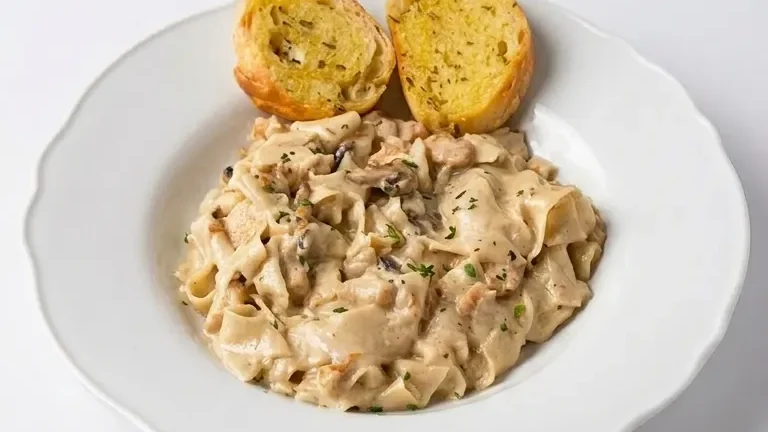
Our chicken alfredo is made with homemade fettuccini. Not store-bought, not par-cooked, not pulled from a freezer. We make the dough in-house, every day. The sauce is our authentic, creamy alfredo — no shortcuts, no powder, no jar. The cream, the butter, the parmesan, the ratios — all of it is deliberate. It took us time to get it right, and what "right" means is specific: a sauce that coats the pasta without drowning it, rich without being heavy, and holds together from kitchen to table.
I'm telling you this because what follows is entirely about ratios. And what happens when ratios get treated as suggestions.
The Table
Three people came in. They ordered the chicken alfredo and, along with the order, came a set of modifications. I wasn't at the table when it started. My team accommodated the request, as they're trained to do — we are a hospitality business, and saying yes is the reflex.
The first request was for the sauce to be runnier. More saucy, they said, something looser. My kitchen executed on exactly that. The pasta went out.
It came back.
Too watery now. They wanted it extra creamy, more than what we'd sent. I was in the kitchen when it came back, and I walked to the table. I told them directly: we can do extra creamy, but when you change the ratios this significantly, the sauce is going to split. The butter will separate out. It won't hold. It won't taste good.
They wanted it anyway.
What Happens When a Sauce Splits
Here's the science of what I was trying to explain at that table, and what they didn't want to hear.
An Alfredo sauce is an emulsion: fat and liquid held together in suspension by heat, agitation, and the proteins in the parmesan. It's not a stable relationship. It's a careful one. The cream is the liquid base, the butter is the fat, and the pasta water( starchy and warm) is the bridge between them. The ratio has to be right because the sauce isn't just flavour. It's structure.
When you push the ratios beyond what the emulsion can hold, the fat breaks free. It pools. The sauce goes from glossy and coating to greasy and separated. This is not a failure of technique. This is what fat does when you ask it to do more than it can. You can't negotiate with that, no matter how firmly you ask.
The second pasta went out. Extra creamy, as requested.
It came back. The butter was separating out of the sauce, they said. Exactly what I had told them would happen.
The Conversation I Walked Into
This is where I stepped in fully, and I want to be honest about how that felt, because it shifted more than once.
I came to the table expecting to find people who were frustrated but reasonable. I was ready to listen. And in the beginning, I did. I took their concerns seriously, I tried to understand what they were actually after.
But then the framing changed.
"We're doctors. You need to do what we ask."
I heard that and went very still. Not angry. Just still. Because what that sentence was telling me is that professional authority in one room transfers to expertise in every room. It doesn't. Being a doctor, (all three of them btw), means understanding the human body with extraordinary depth. It does not mean you understand emulsification, or why an authentic Alfredo behaves the way it does, or what happens when you keep changing the brief mid-execution and then hold the kitchen responsible for the result.
Then came the other line: "Your menu is small. You need to make space for customisations."
Our menu is small on purpose. We are an all-natural kitchen. The pasta, the sauces, the bread — everything is made in-house. That takes time, skill, and a very deliberate process. A larger menu would mean compromises we are not willing to make. Our size is not a gap we need to fill. It's a choice we made.
I explained this. I stayed calm. I was not unkind.
But I didn't fold.
The Part That Actually Frustrated Me
By the end, they wanted the original dish. The one on the menu, but without any cream. Now the change asked for mounted up to three times in total.
We don't make Alfredo without cream. We never have. It's not a variation we offer because it's not, technically, the dish anymore.
Then they asked us to cancel it from the bill because they hadn't been served the way they wanted to be.
This is the part that stayed with me long after they left. Not because of the bill — that's not the point. But because what they were describing as a service failure was a consequence of their own instructions. We had warned them. We had remade the dish twice. We had been transparent about exactly what would happen, and it happened, and somehow that became our fault.
They left unhappy. We didn't cancel the dish.
What Changed After
For more background context, we've had an Indian restaurant opposite us shut down about two months before, and their regulars had started walking in — expecting, in some cases, the same kind of food: Indianised continental. Dishes with familiar spices folded in. Suggestions, some politely worded and some not, that our food would be "better" with a few adjustments. The team had been fielding these requests quietly, accommodating where they could, and carrying the weight of it without making it a big issue. The Alfredo incident was the straw that broke the camel's back.
So two days after the incident, we had our weekly leadership debrief. The meeting consisted of the head of house, kitchen and bakery leads, HR, and me. The Alfredo table came up almost immediately. I didn't have to bring it up; the team already had.
Once everyone was caught up to the situation and how it was handled, we decided to remove modifications off the table. The relief in that room when we decided to formalise it was real. Nobody pushed back. There was a silent but clear unity in the decision when proposed.
So we have a policy now. We don't do alterations to the dishes on our menu. For now, the team communicates it directly when a customisation request comes in. Next week, it goes on the new menu copy.
Not because we don't care about our guests — we do, enormously. But a recipe is not a list of ingredients you can shuffle around and still expect the same outcome. It is a set of relationships. The cream and the butter have a relationship. The heat and the timing have a relationship. The pasta and the sauce have a relationship. When you break one, you break all of them, and we are the ones left holding the result.
Saying yes to everything is not hospitality. Sometimes it's just avoidance. What we owe our guests is honesty — about what we can do, what we can't, and why. That is harder than just saying yes. But it is more respectful, and it produces food we are actually proud to send to the table.
The guest who gets our chicken alfredo as it is meant to be made gets something we genuinely stand behind. That matters to us more than being agreeable.
This table taught us that.
The Other Table
The very next day, a couple came in and ordered the chicken alfredo. No modifications. Just the dish.
I wasn't on the floor that evening — my head of house was. He told me about it the next morning, and it's the kind of story I keep coming back to.
When the couple walked up to the billing counter at the end of their meal, the wife was tearing up. My head of house saw her and immediately got worried and asked if everything was okay.
She looked at him and said, "Do you not see me cry?"
He panicked a little, he admitted to me later. He asked if something was wrong, if something hadn't been right with the food.
She said: "Absolutely not. The food was so beautiful that I couldn't stop tearing up. Please don't change anything. This is the best food I've had in a very long time."
That is what the dish is supposed to do. Not to every person — we know we're not for everyone. But to the person who comes to the table ready to receive what we're actually offering, without negotiating it into something else first, that is what it can do.
The three doctors left angry because the dish didn't become what they wanted it to be. The couple the next day left in tears because it was exactly what it was meant to be.
We'll keep making it the second way.
Deepika is the founder of Naveh Collective, a hospitality group operating across bakeries, continental dining, and corporate kitchens, building towards 100 outlets over the next decade.