Before the First Guest
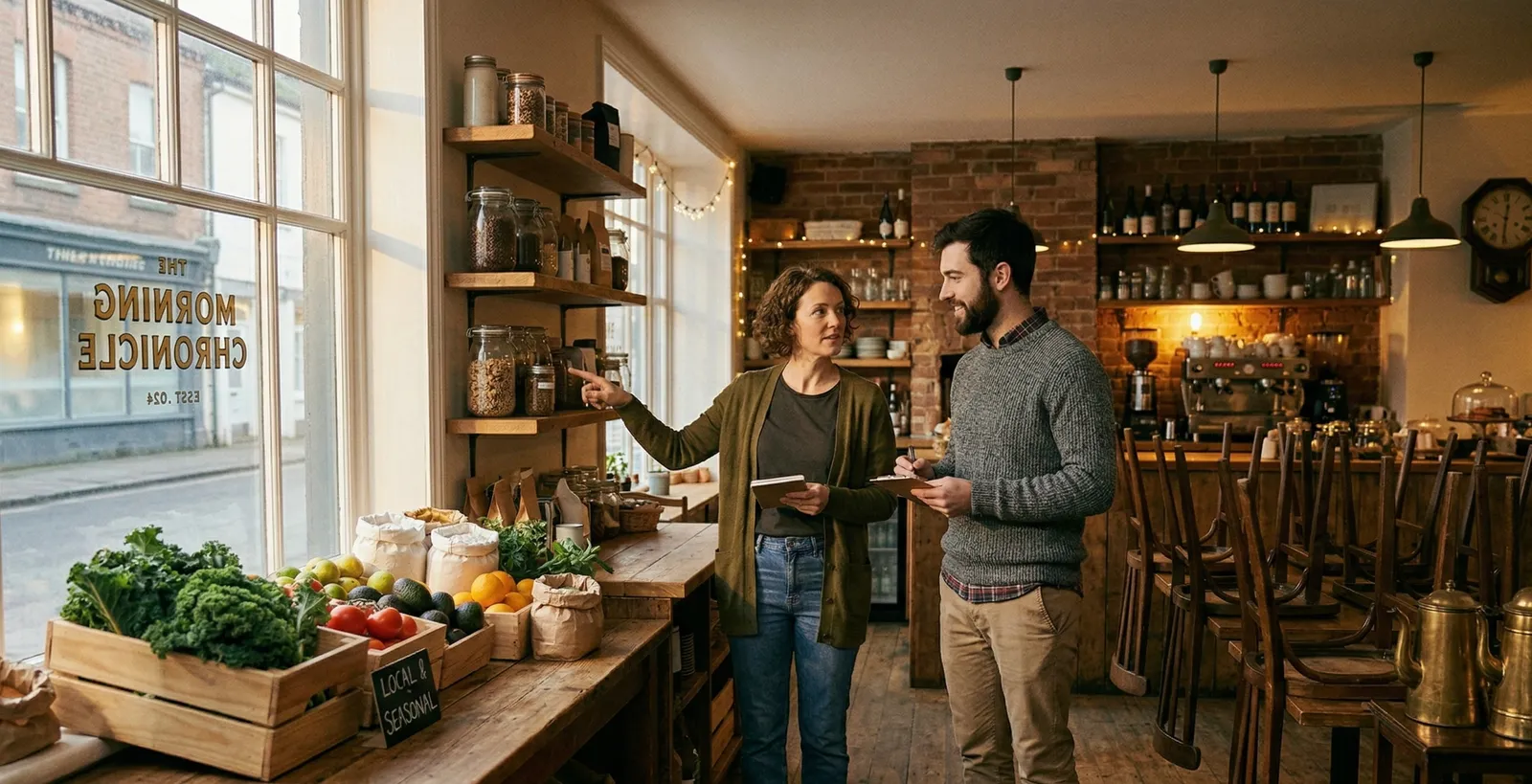
Nobody talks about what happens before the doors open.
The blogs, the case studies, the hospitality content you see online, it's all about the service. The plating. The guest experience. The moment the food lands on the table and someone's eyes light up. That part is real, and that part matters. But there is another story that happens in the hour before any of that. A quieter story, less photogenic, where the actual foundation of your day gets laid.
At Bread and Brew, that story belongs to both of us, our founder and me, building this thing together, one morning at a time. And if we're being honest, we are still figuring out how to write it well.
The Morning Before the Morning
The first thing on our mind when we open up is not the menu. It's not the reservations. It's not even the team.
It's the ingredients.
We source fresh every single day. That is not a marketing line, it is a logistical reality that starts before most people have had their first cup of coffee. Do we have everything we need to open? Are we missing anything that would force us to pull an item off the menu before we've served a single guest? That question sits at the front of every morning until it is answered.
We are working to change this, to plan further ahead, to store smarter, to not be scrambling at 9am for things we should have confirmed the night before. But right now, this is the rhythm. Source, confirm, open. Every day.
Once the kitchen is confirmed, the team comes together. Before a single table is set or a machine is switched on, we brief. Everyone in the room, together, before the day begins. We use that time to do something that might sound small but we have come to believe is not small at all. We appreciate the team for what they did the day before.
Not in a performative way. Specifically. What went well, who handled something difficult, where we saw someone step up. And then we talk about today.
The reason we do this in the morning and not at the end of the previous shift is something we've learnt from watching people. When the shift ends, everyone is tired. They go home. Life happens. By the time they walk back in the next morning, whatever was said at closing the night before has been buried under sleep, traffic, a difficult phone call, something their landlord said. They arrive carrying the weight of their lives outside these walls.
A morning appreciation resets that. It reminds them, before the pressure of the day begins, that they are capable. That yesterday they did something right. That this team sees them.
After the briefing, we walk the floor. Every surface, every corner clean. Not presentable. Clean. There is a difference, and anyone who has worked in food service knows exactly what that difference looks like and smells like.
That is our morning. Sourcing, briefing, cleaning. Before a single guest walks in.
The Day Hyperpure Didn't Show Up
We order our weekly supplies from Hyperpure. Every Tuesday morning, the delivery arrives and the week has its backbone.
A few weeks ago, that backbone didn't show up.
There was an issue on their end. The delivery, which should have come in the morning, was pushed to late evening. We had already paid, a significant order, money already out the door, and we had nothing to open with.
We waited. We made calls. We set everything up anyway, going through the motions of opening a café that had no supplies to open with. And when it became clear the delivery wasn't coming in time, we did what you do when the system fails you. We went to the shops nearby, bought what we could, and opened late.
Smaller menu. Delayed start. But we opened.
We think about that morning often, not because it was a crisis but because of what it revealed. We showed up. Not because a checklist told us to, not because there was a contingency plan on paper. We showed up because that is the default setting of this team when things go wrong. That instinct is worth something. But instinct alone cannot be the plan. Not if we want to grow.
The Weight You Carry When You Run on Gut
Two or three times a week, we feel it.
It's hard to describe precisely, not panic, not burnout, more like a low hum of pressure that builds when you realise how many things are being held together by judgment calls and muscle memory rather than systems. The daily sourcing that depends on someone being on top of it. The team communication that works because we are in the room. The quality control that happens because we walk the floor every morning.
What happens when we're not there?
That is the question that sits with us on those two or three days a week. And it leads to a bigger question, one that is really about where we are going.
We have plans to grow to 100 outlets over the next decade. That is not a distant dream, it is a direction we are actively building toward. But here is what we know to be true: if this one outlet is not set, none of the others will be either. Everything we want to build across a hundred locations will trace back to whether we figured it out here first. Outlet one is not just a café. It is the proof of concept for everything that comes after.
You cannot franchise chaos. You cannot scale gut feeling. You can scale systems. You can scale a culture. But first, you have to build them.
The Two Things That Hold Everything Else Up
When we strip it all the way back, past the morning briefings and the sourcing runs and the late deliveries and the Valentine's Day chaos, what we're really working on is two things.
Sourcing and staffing.
Not the most exciting sentence we could write. But the truest one.
If we know every morning that the ingredients are in and the right people are on the floor, everything downstream becomes manageable. The food goes out on time. The team communicates. The guest has a good evening. The checklist gets followed. The quality holds.
But if sourcing is uncertain, everything that follows is built on sand. And if the team isn't trained, aligned, and trusted, if they don't think the way the operation needs them to think, then we are not running a restaurant. We are running in circles.
Get those two things right at one outlet. Then build the next one on top of that foundation.
That's not a plan for 100 outlets. That's a plan for outlet one. And right now, outlet one is where all of our attention belongs.